
What We Discovered About Plastic Pollution Through GIS Mapping
During my time as a research intern in the CCNY CREST HIRES program, I had the opportunity to work with fellow interns on a GIS StoryMap exploring one of today's most pressing environmental challenges: plastic waste entering our oceans.
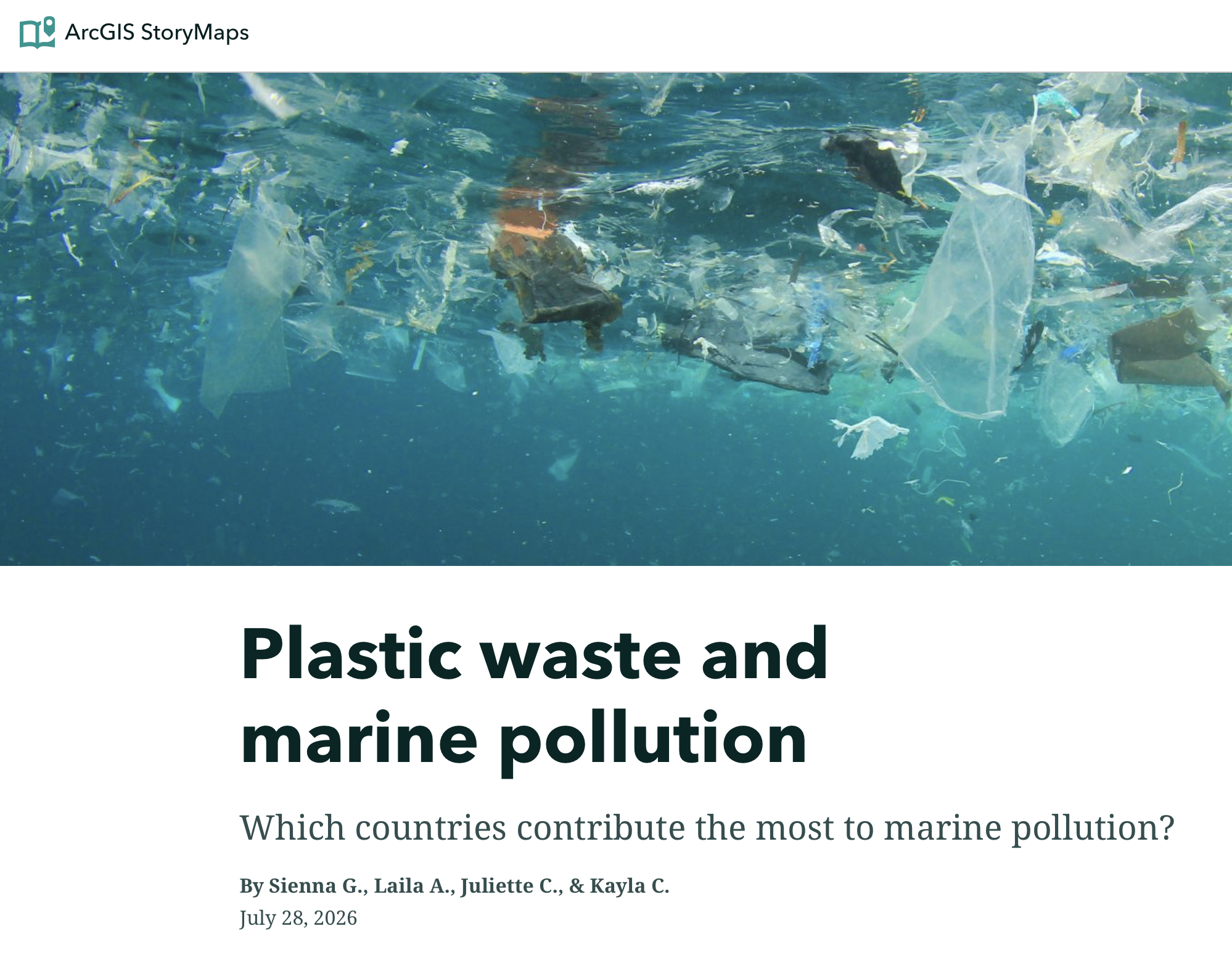
Picture of GIS StoryMap created during the CCNY CREST HIRES research internship
Using ArcGIS and global environmental datasets, we investigated where plastic pollution originates and which countries contribute the largest amounts of mismanaged plastic waste that can enter marine environments, measuring the overlap with maps showing some of the world's most important marine biodiversity hotspots.
Our goal was to use spatial analysis to better understand how human waste production can affect vulnerable marine ecosystems.
Questions we explored:
Which countries contribute the most plastic waste that reaches the ocean?
Where are marine biodiversity hotspots located relative to these pollution sources?
Which coastal regions may face greater risks because of the combination of high plastic inputs and rich marine biodiversity?
By layering multiple datasets in ArcGIS, we found that many areas supporting marine biodiversity are located near regions where plastic pollution is particularly severe. This highlights an important challenge for conservation as some of Earth's most valuable ocean ecosystems are also those most exposed to plastic pollution.
If you'd like to explore our findings in more detail, including our data maps and analyses, you can view our StoryMap here:
I hope it offers a new perspective on how geography, data science, and environmental research can work together to better understand and protect our oceans.
